
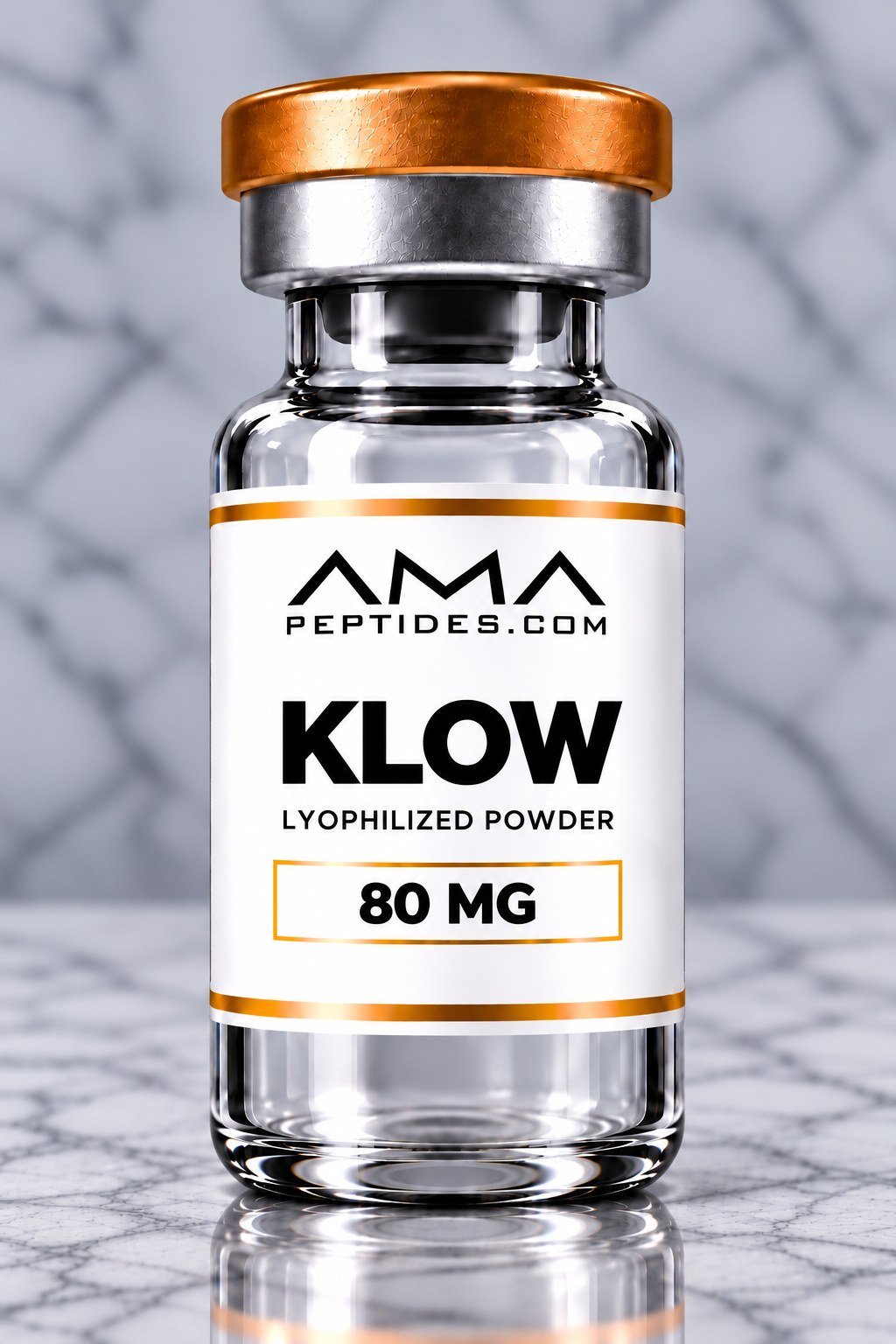
Description
Klow is a precision research blend combining four independently characterized peptides — GHK-Cu, KPV, BPC-157, and TB-500 — with complementary and non-overlapping mechanisms across tissue repair, inflammatory regulation, and cellular regeneration pathways.
Research Overview
Each constituent has been studied in peer-reviewed literature: BPC-157 (Body Protection Compound-157), a 15-amino acid gastric juice-derived peptide, has been characterized across gastrointestinal, musculoskeletal, and neural healing models over 25+ years of published research, with mechanisms including VEGF upregulation and nitric oxide system modulation. TB-500 (synthetic Thymosin Beta-4) has been studied for actin sequestration and cell migration promotion, with cardioprotective and angiogenic effects documented in preclinical models; bremelanotide (PT-141) shares a structural lineage with research on this class. GHK-Cu’s roles in collagen/elastin upregulation and broad genomic tissue-repair signaling are well-characterized (see individual product listing). KPV, a C-terminal tripeptide of α-MSH, has been studied for localized anti-inflammatory activity via melanocortin receptor pathways, with intestinal inflammation models showing significant mucosal protection. Research teams examining multi-pathway repair approaches have noted that BPC-157’s angiogenic signaling and TB-500’s cell migration effects represent distinct, potentially complementary mechanisms — an active area of combinatorial investigation.
Key References
- Sikirić P et al. (2018). Brain-gut Axis and Pentadecapeptide BPC 157. Current Neuropharmacology.
- Goldstein AL et al. (2012). Thymosin β4: a multi-functional regenerative peptide. Expert Opinion on Biological Therapy.
- Brzoska T et al. (2008). Alpha-MSH and related tripeptides: biochemistry, anti-inflammatory and protective effects. Endocrine Reviews.
Reviews
There are no reviews yet.