
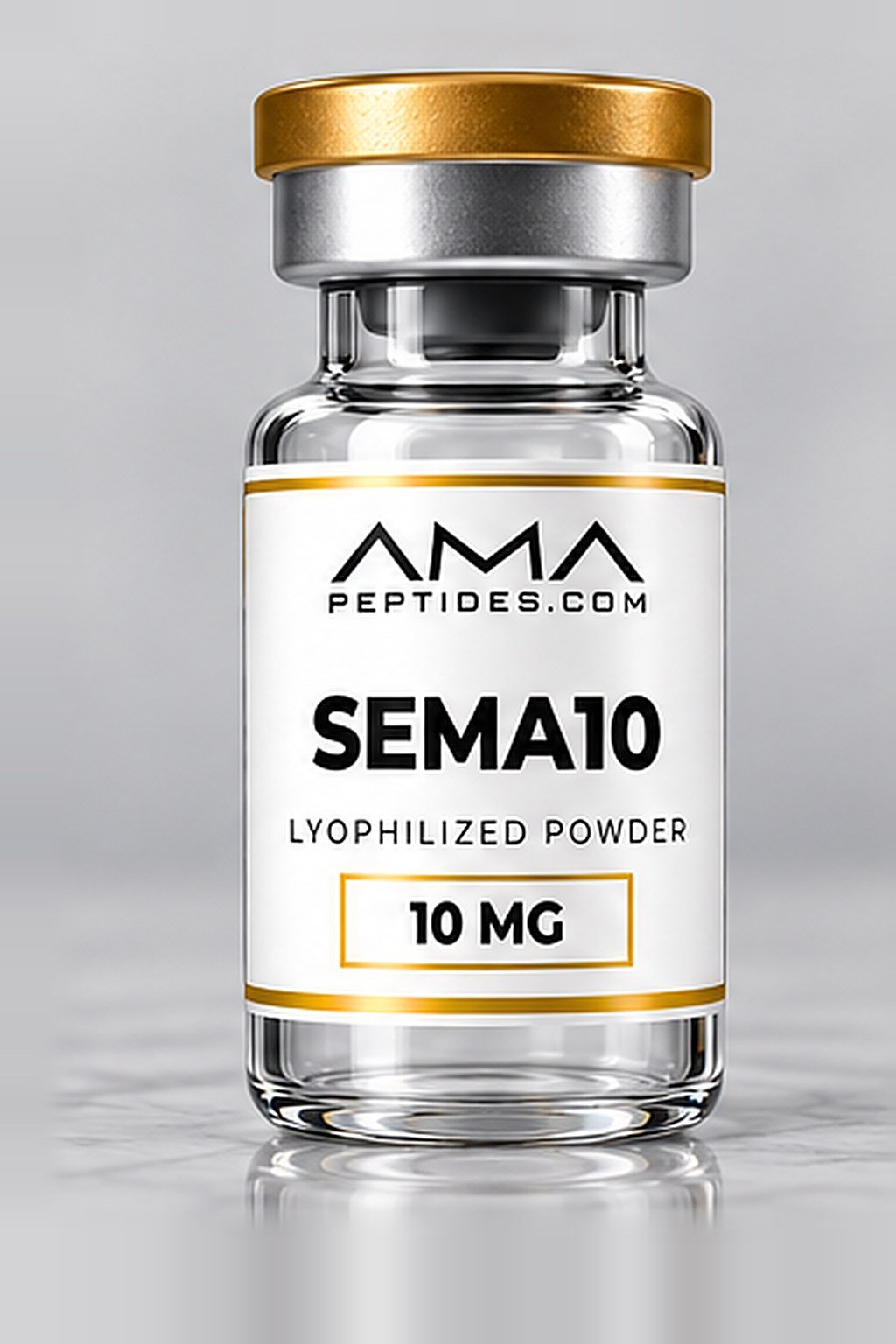
Description
Semaglutide is a GLP-1 receptor agonist with 94% sequence homology to human GLP-1, modified with a C18 fatty diacid chain and two amino acid substitutions that extend half-life to approximately 7 days, enabling once-weekly dosing in clinical research.
Research Overview
Semaglutide’s evidence base is among the most comprehensive of any peptide in metabolic research. The STEP trial series (New England Journal of Medicine, 2021) established mean weight reductions of 14.9% (STEP-1) and 17.4% (STEP-3) at 68 weeks in adults with obesity, with STEP-4 demonstrating weight regain upon discontinuation — providing mechanistic insight into sustained vs. transient GLP-1 signaling. The SUSTAIN-6 cardiovascular outcomes trial demonstrated a significant reduction in major adverse cardiovascular events in type 2 diabetes patients, subsequently extended in the SELECT trial (2023, NEJM) to individuals with obesity and established cardiovascular disease without diabetes — the first trial to demonstrate cardiovascular risk reduction with a weight-loss medication in a non-diabetic population. Mechanistic research has characterized GLP-1 receptor expression across hypothalamic nuclei governing appetite, the dorsal vagal complex, and peripheral tissues including the heart, kidney, and vasculature. The FLOW trial (2024) established significant renoprotective effects in diabetic kidney disease, opening a new area of ongoing investigation. Research teams continuing to study GLP-1 receptor distribution and downstream biology use semaglutide’s clinical dataset as a rich source of translatable mechanistic hypotheses.
Key References
- Wilding JPH et al. (2021). Once-Weekly Semaglutide in Adults with Overweight or Obesity (STEP-1). New England Journal of Medicine.
- Marso SP et al. (2016). Semaglutide and Cardiovascular Outcomes in Patients with Type 2 Diabetes (SUSTAIN-6). New England Journal of Medicine.
- Lincoff AM et al. (2023). Semaglutide and Cardiovascular Outcomes in Obesity without Diabetes (SELECT). New England Journal of Medicine.
Reviews
There are no reviews yet.