
Description
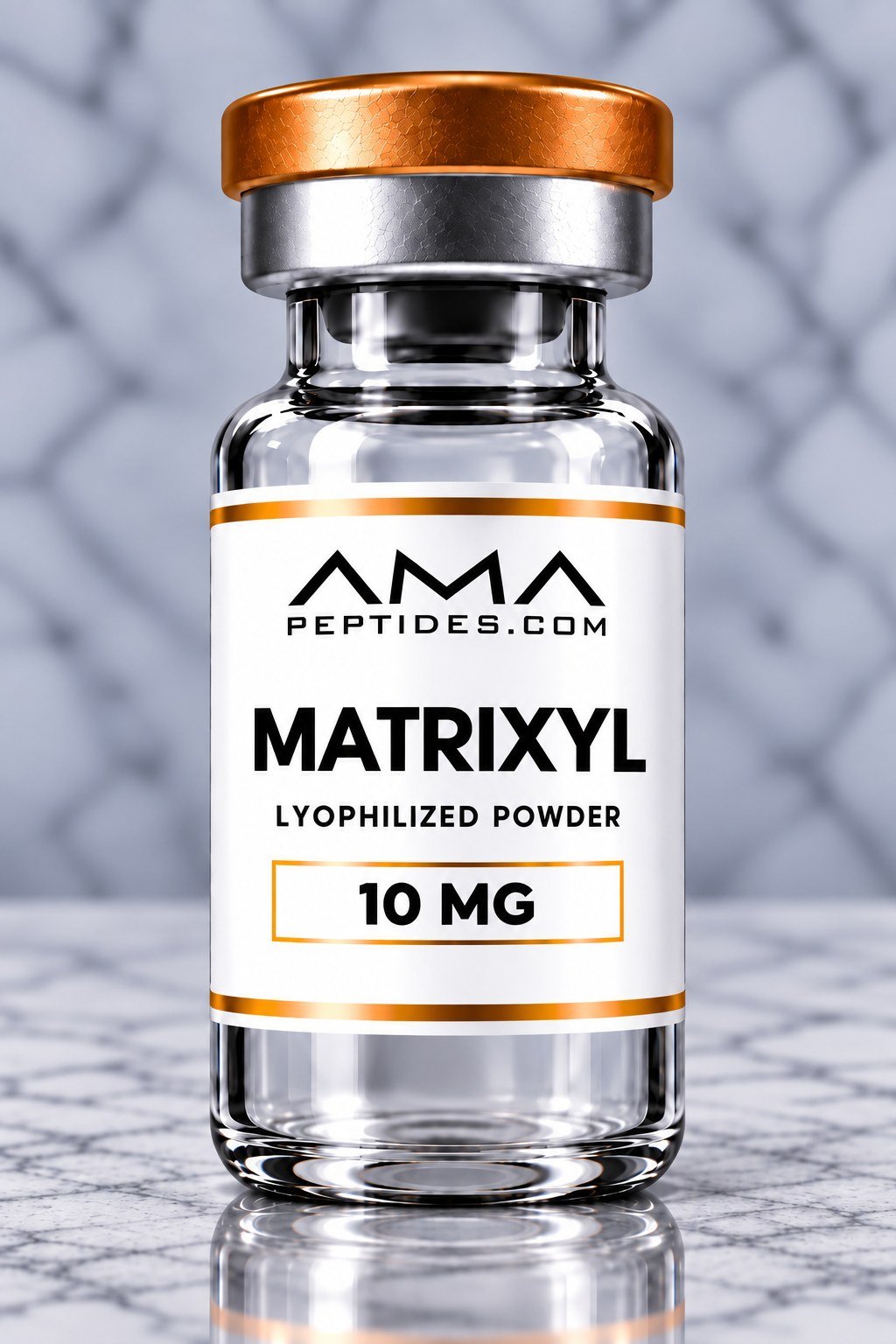
Matrixyl (Palmitoyl Pentapeptide-4 / palmitoyl-KTTKS) is a lipophilic pentapeptide derived from the procollagen type I C-terminal propeptide sequence, developed following identification of KTTKS as a matrikine — a biologically active matrix fragment that signals fibroblasts to upregulate matrix synthesis.
Research Overview
The research foundation for Matrixyl traces to identification of KTTKS as a procollagen-derived signal that triggers collagen and fibronectin production when matrix is degraded — a wound-signaling mechanism that has since been exploited in numerous dermatological research contexts. Human fibroblast studies have documented increased mRNA expression and protein secretion of collagen I, collagen III, and fibronectin following KTTKS exposure in culture. Palmitoylation of the peptide was studied as a strategy to enhance penetration through the stratum corneum by increasing lipophilicity, enabling topical delivery. A randomized, double-blind, split-face clinical study published in International Journal of Cosmetic Science demonstrated statistically significant reductions in wrinkle depth and area at 12 weeks with twice-daily topical application. Subsequent research extended the Matrixyl platform to palmitoyl tripeptide-1 and palmitoyl tetrapeptide-7 combinations (Matrixyl 3000), expanding the matrikine signaling approach. Research teams continuing work in dermal matrix biology use Matrixyl and its derivatives as reference tools in collagen induction pathway studies, with current investigation examining extracellular matrix modeling in aged fibroblast systems.
Key References
- Robinson LR et al. (2005). Topical palmitoyl pentapeptide provides improvement in photoaged human facial skin. International Journal of Cosmetic Science.
- Katayama K et al. (1993). A pentapeptide from type I procollagen promotes extracellular matrix production. Journal of Biological Chemistry.
- Lintner K, Peschard O. (2000). Biologically active peptides: from a laboratory bench curiosity to a functional skin care product. International Journal of Cosmetic Science.
Reviews
There are no reviews yet.