
Description
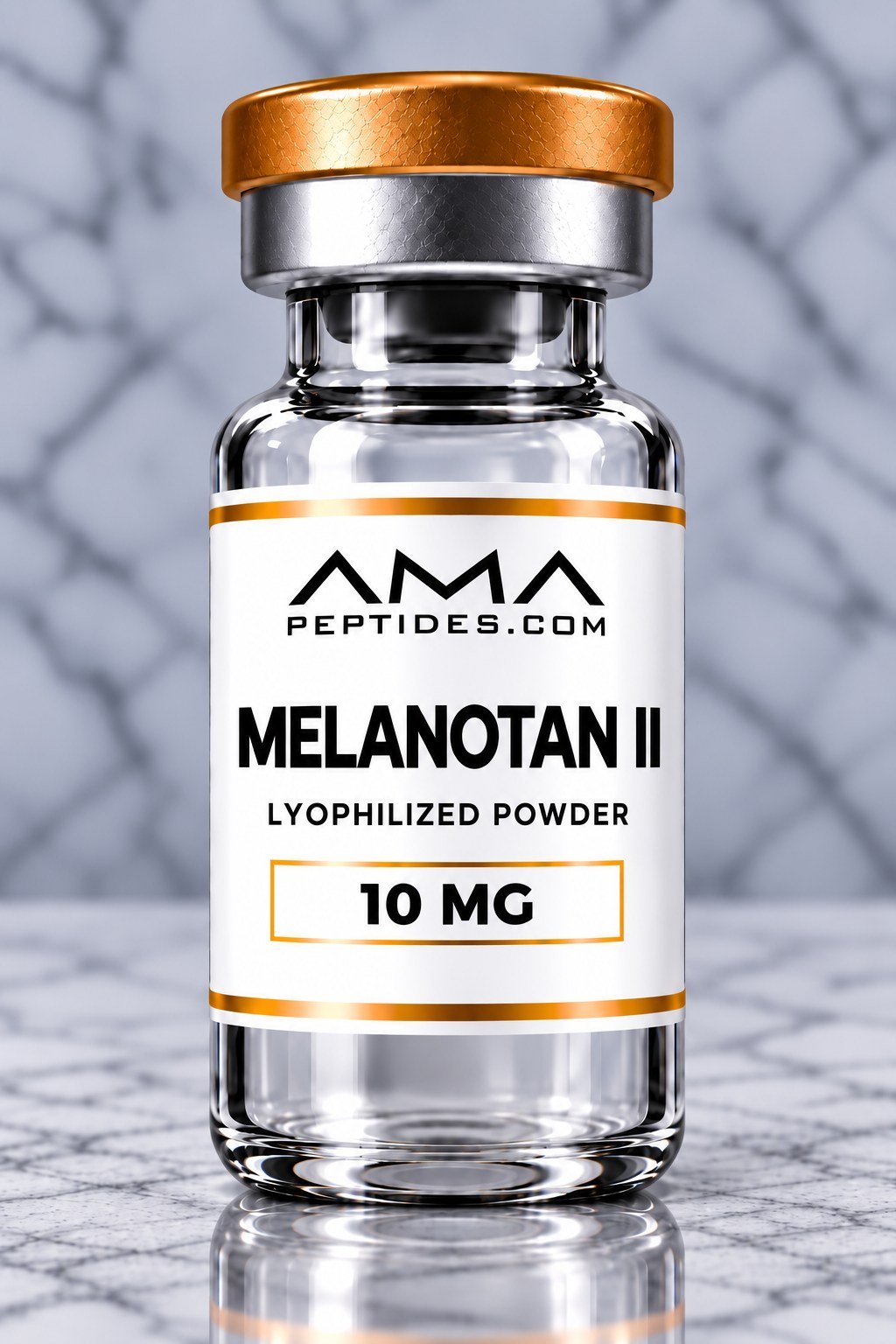
Melanotan II is a synthetic cyclic heptapeptide analog of alpha-melanocyte-stimulating hormone (α-MSH), developed at the University of Arizona in the 1980s and subsequently studied for its high-affinity, broad-spectrum binding across melanocortin receptor subtypes (MC1R–MC5R).
Research Overview
Initial pharmacological characterization documented substantially increased potency and half-life versus endogenous α-MSH, attributable to its cyclic structure and D-Phe substitution at position 7. MC1R activation has been studied for its role in melanogenesis — specifically the shift toward eumelanin (brown/black pigment) production — and for anti-inflammatory effects in skin and macrophage models. MC4R binding in hypothalamic pathways has made Melanotan II a central tool compound in sexual function and appetite regulation research; bremelanotide (PT-141), an FDA-approved pharmaceutical for hypoactive sexual desire disorder in women, was developed from this research lineage. MC3R and MC5R involvement has been examined in energy homeostasis and exocrine gland regulation models, respectively. Photoprotection research has explored whether pre-exposure melanin induction could reduce UV damage risk — findings that remain under active examination. Research teams continuing investigation of the melanocortin system use Melanotan II extensively as a reference agonist for characterizing receptor subtype pharmacology and downstream cAMP/MAPK signaling cascades.
Key References
- Dorr RT et al. (1996). Evaluation of melanotan-II, a superpotent cyclic melanotropic peptide in a pilot phase-I clinical study. Life Sciences.
- Wessells H et al. (2000). Effect of an alpha-melanocyte stimulating hormone analog on penile erection and sexual desire in men with organic erectile dysfunction. Urology.
- Brzoska T et al. (2008). Alpha-MSH and related tripeptides: biochemistry, anti-inflammatory and protective effects. Endocrine Reviews.
Reviews
There are no reviews yet.