
Description
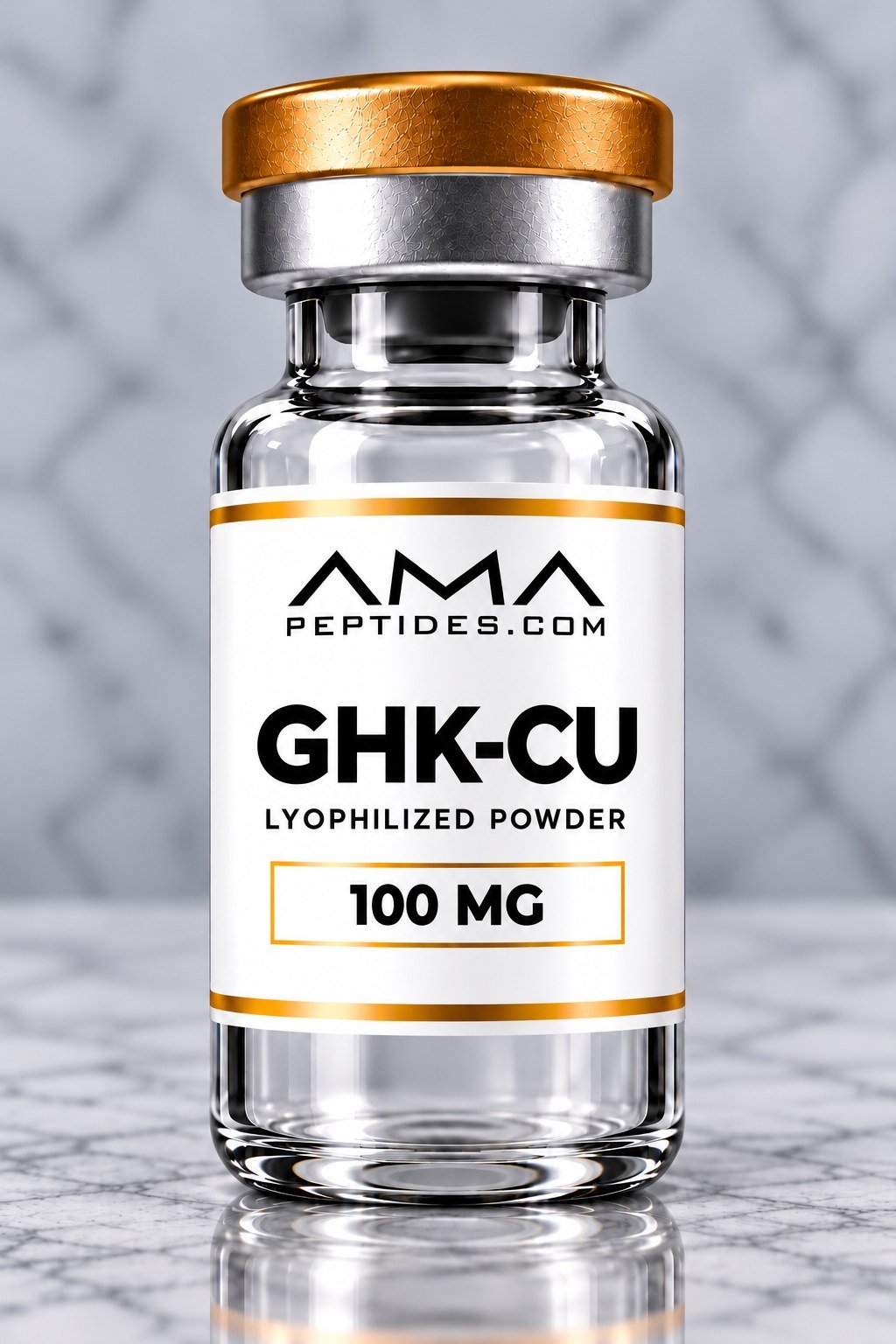
GHK-Cu (Glycyl-L-Histidyl-L-Lysine Copper) is a naturally occurring tripeptide-copper complex first isolated from human plasma. Its presence in wound fluid and skin led to decades of investigation into its role as an endogenous tissue remodeling signal.
Research Overview
Foundational work established that GHK-Cu upregulates synthesis of collagen, elastin, and glycosaminoglycans in fibroblast cultures while simultaneously activating matrix metalloproteinases that clear damaged matrix — a dual remodeling action documented across multiple in vitro systems. Gene expression analysis published in BioMed Research International (2015) identified GHK-Cu modulation of over 4,000 human genes, with significant upregulation of antioxidant and tissue-repair networks and downregulation of inflammatory and oncogenic pathways. Anti-inflammatory activity has been characterized through suppression of TNF-α and IL-6. Preclinical wound healing models demonstrate accelerated re-epithelialization and increased angiogenesis. Neuroprotective potential has been explored in models of oxidative stress, with BDNF upregulation noted in relevant studies. Research teams advancing this work have increasingly focused on GHK-Cu’s genomic footprint as a broad tissue-repair signal, with ongoing investigation into dose-response relationships across different tissue systems.
Key References
- Pickart L et al. (2015). GHK Peptide as a Natural Modulator of Multiple Cellular Pathways in Skin Regeneration. BioMed Research International.
- Pickart L, Margolina A. (2018). Regenerative and Protective Actions of the GHK-Cu Peptide. International Journal of Molecular Sciences.
- Pickart L. (2008). The human tri-peptide GHK and tissue remodeling. Journal of Biomaterials Science, Polymer Edition.
Reviews
There are no reviews yet.