
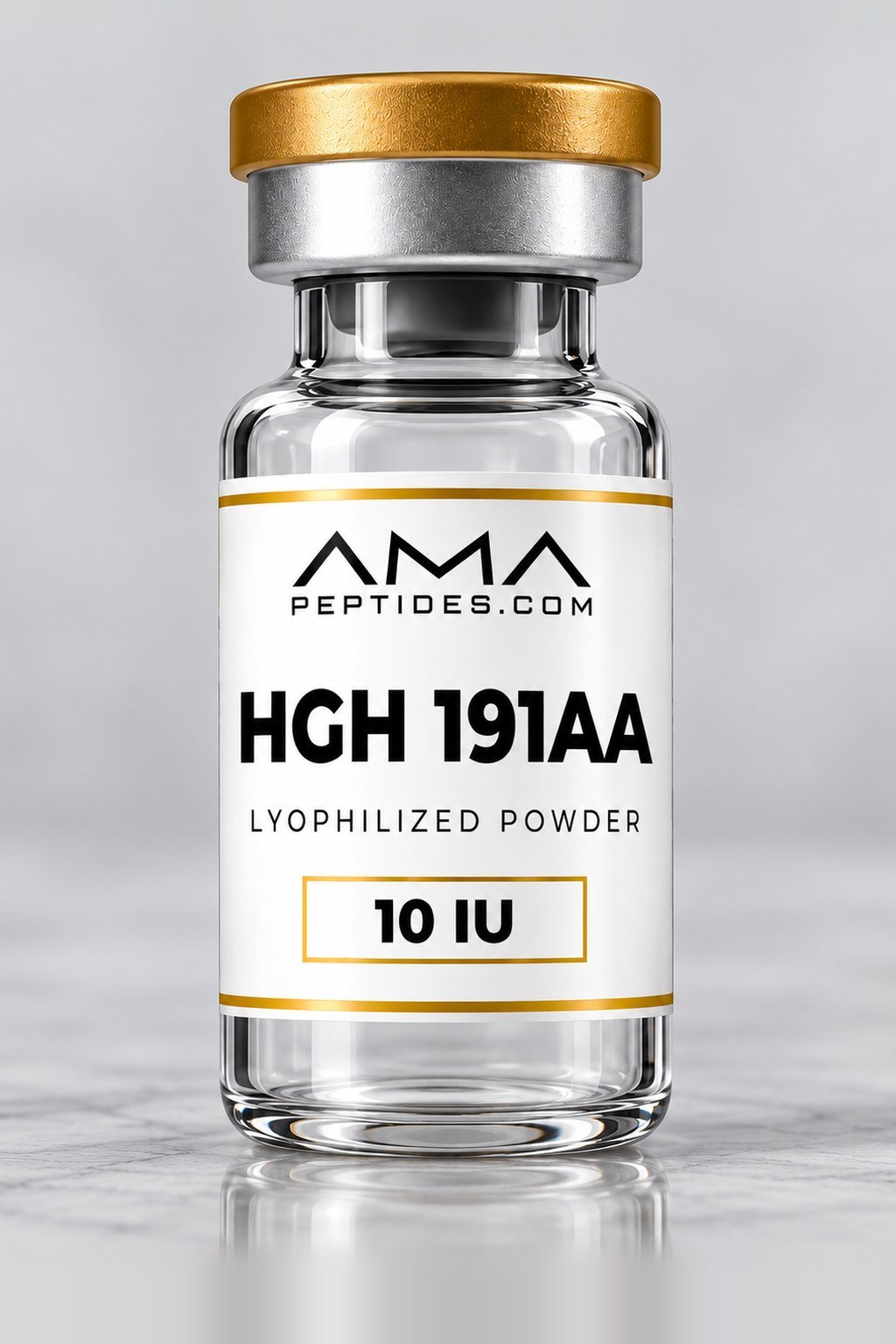
Description
HGH 191-AA (human growth hormone, 191 amino acid sequence) is a recombinant peptide identical in structure to endogenous growth hormone — a 191-residue single-chain polypeptide produced by the anterior pituitary gland. The designation “191-AA” refers to the complete native amino acid sequence, distinguishing it from truncated or modified variants used in some research contexts. Endogenous GH acts primarily through stimulation of insulin-like growth factor 1 (IGF-1) production in the liver and peripheral tissues, initiating a cascade of anabolic and metabolic effects that have made it a subject of sustained research interest.
A foundational study by Rudman et al. (1990) published in the New England Journal of Medicine examined GH administration in elderly male subjects and documented significant changes in lean body mass, adipose tissue distribution, and bone density over a 6-month period, establishing the framework for subsequent aging and body composition research in this area (PubMed 2355952). Research groups extending this work have investigated the GH/IGF-1 axis in the context of metabolic regulation, skeletal muscle protein synthesis, and lipolysis — with particular focus on GH’s role in activating JAK2-STAT5 signaling pathways downstream of the GH receptor (PubMed search). Investigators continuing this line of inquiry have also examined GH secretion patterns, pulsatility, and receptor sensitivity as variables that influence experimental outcomes across model systems.
Current research applications include studies of somatotropic axis regulation, tissue repair mechanisms, and age-associated decline in GH secretion. Each 10iu lyophilized vial is independently verified to >98% purity with a Certificate of Analysis on file.
Reviews
There are no reviews yet.