
Description
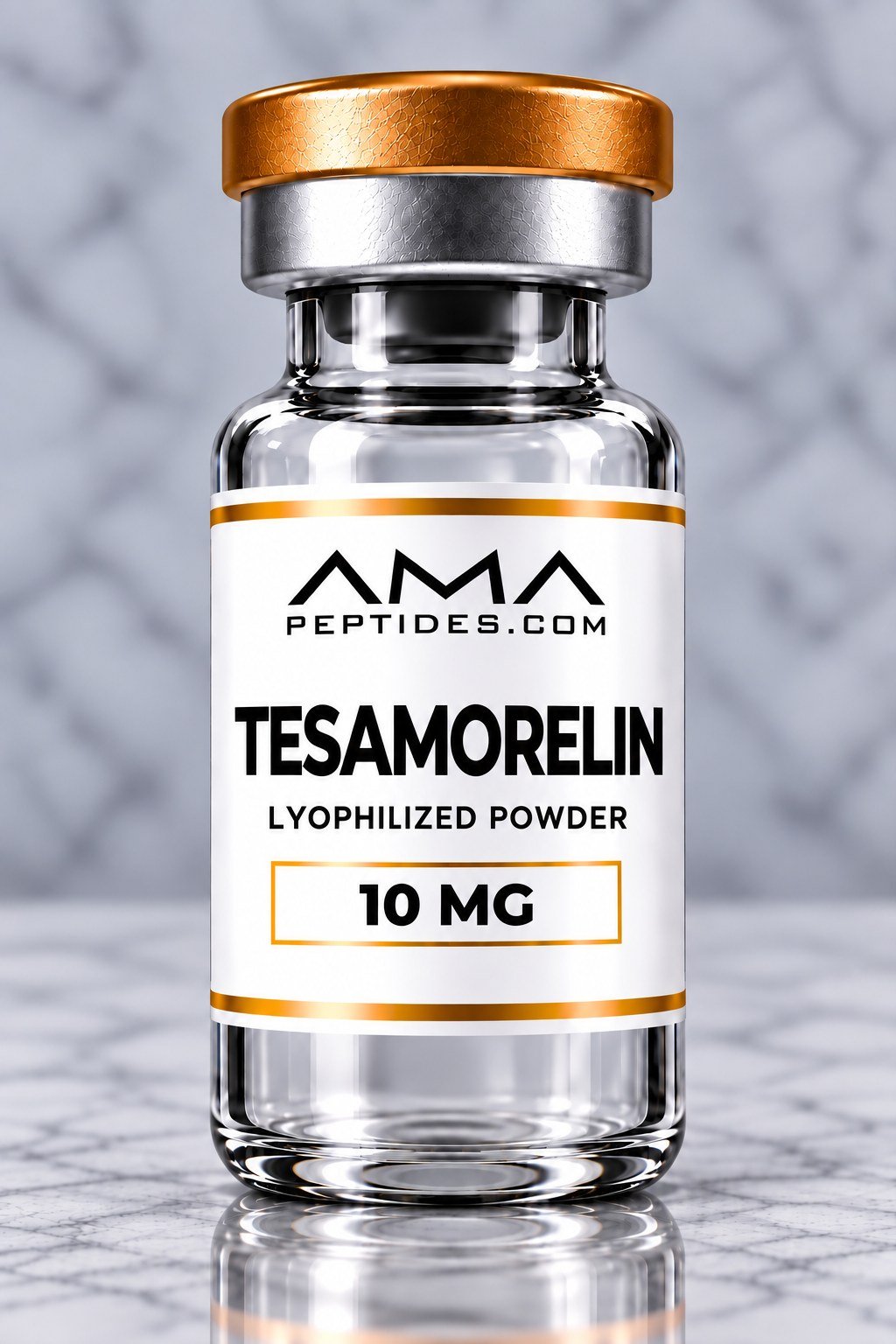
Tesamorelin is a synthetic 44-amino acid analog of endogenous Growth Hormone-Releasing Hormone (GHRH), with a trans-3-hexenoic acid modification at the N-terminus that confers resistance to dipeptidyl peptidase-IV cleavage, significantly extending its half-life versus native GHRH.
Research Overview
Tesamorelin holds the distinction of being one of the few synthetic peptides to receive FDA approval — cleared in 2010 (Egrifta®) for HIV-associated lipodystrophy following pivotal Phase 3 trials. Published in The New England Journal of Medicine (2010), these trials demonstrated significant reductions in visceral adipose tissue (VAT) averaging 15-18% at 26 weeks, with IGF-1 normalization as a secondary endpoint. A key mechanistic advantage studied in the literature is tesamorelin’s preservation of pulsatile GH secretion patterns, in contrast to exogenous GH administration, which has made it a tool for studying physiological GH axis restoration without suppressing endogenous GHRH signaling. Research in non-HIV populations has examined tesamorelin for age-related visceral fat accumulation, with studies in older adults demonstrating comparable VAT reductions. Cognitive research programs at Wake Forest have investigated whether IGF-1 modulation via GHRH stimulation may influence hippocampal volume and memory performance — an area of active investigation with pilot data suggesting potential relevance to cognitive aging models. Lipid metabolism studies have documented improvements in triglyceride levels and body composition parameters. Research teams continuing work on GH axis biology continue to use tesamorelin as a precision GHRH analog for characterizing pulsatile growth hormone secretion and downstream IGF-1 tissue effects.
Key References
- Falutz J et al. (2007). Metabolic Effects of a Growth Hormone–Releasing Factor in Patients with HIV. New England Journal of Medicine.
- Stanley TL et al. (2012). Effect of tesamorelin on visceral fat and liver fat in HIV-infected patients: a randomized clinical trial. JAMA.
- Tesamorelin cognition and aging research. [PubMed Search]
Reviews
There are no reviews yet.